

Pugapia and her daughters Aiga and Babawru lived for years as the one surviving members of the Akuntsu, an Indigenous folks decimated by a government-backed push to develop components of the Amazon rainforest.
As they superior in age with out a baby to hold on the road, many anticipated the Akuntsu to fade when the ladies died.
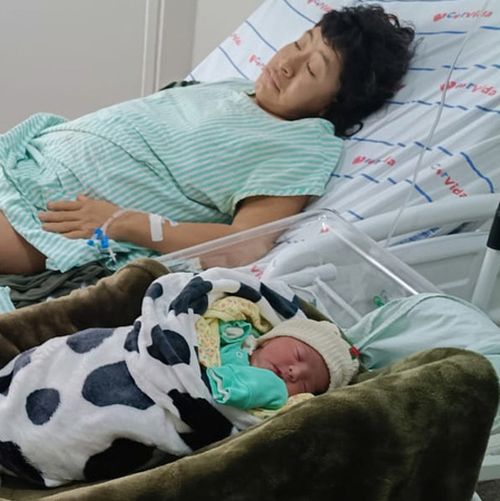
That modified in December, when Babawru — the youngest of the three, in her 40s — gave delivery to a boy.
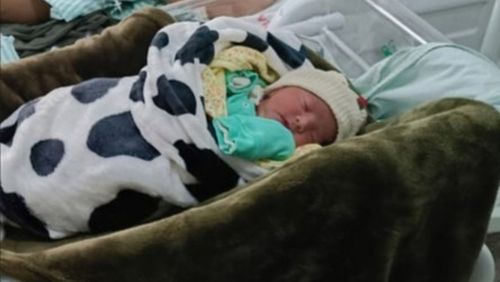
Akyp’s arrival introduced hope not only for the Akuntsu line but additionally for efforts to guard the equally fragile rainforest.
“This baby will not be solely a logo of the resistance of the Akuntsu folks, but additionally a supply of hope for Indigenous peoples,” mentioned Joenia Wapichana, president of Brazil’s Indigenous safety company, referred to as Funai.
“He represents how recognition, safety and the administration of this land are extraordinarily essential.”
Defending Indigenous territories is broadly seen as one of the crucial efficient methods to curb deforestation within the Amazon, the world’s largest rainforest and a key regulator of world local weather.
Researchers warn that continued forest loss may speed up international warming. A 2022 evaluation by MapBiomas, a community of nongovernmental teams monitoring land use, discovered Indigenous territories in Brazil had misplaced only one per cent of native vegetation over three many years, in contrast with 20 per cent on personal land nationwide.
In Rondonia state, the place the Akuntsu dwell, about 40 per cent of native forest has been cleared, and what stays untouched is essentially inside conservation and Indigenous areas. The Akuntsu’s land stands out in satellite tv for pc photographs as an island of forest surrounded by cattle pasture in addition to soy and corn fields.
Within the Eighties, deforestation pushed assaults in Rondonia
Rondonia’s deforestation traces again to a government-backed push to occupy the rainforest throughout Brazil’s army regime within the Seventies.
Across the identical time, an infrastructure program financed partly by the World Financial institution promoted home migration to the Amazon, together with the paving of a freeway throughout the state.
Within the Eighties, Rondonia’s inhabitants greater than doubled, in keeping with census knowledge. Settlers have been promised land titles in the event that they cleared the forest for agriculture and risked dropping claims if Indigenous folks have been current, fuelling violent assaults by employed gunmen on Indigenous teams such because the Akuntsu.
Funai made first contact with the Akuntsu in 1995, discovering seven survivors. Consultants consider they’d numbered about 20 a decade earlier, after they have been attacked by ranchers searching for to occupy the realm.
Funai brokers discovered proof of the assault, and after they contacted the Akuntsu, the survivors recounted what occurred. Some nonetheless bore gunshot wounds.
The final Akuntsu man died in 2017. Since then, Babawru lived together with her mom, Pugapia, and Aiga, her sister. The ladies, whose ages aren’t recognized for sure, have chosen to stay remoted from the non-Indigenous world, exhibiting little curiosity in it.
In 2006, Funai granted territorial safety to the Akuntsu, establishing the Rio Omere Indigenous Land, which they’ve since shared with the Kanoe folks. The 2 teams, as soon as enemies, started sustaining contact, normally mediated by officers. The connection is advanced, with cooperation but additionally cultural variations and language obstacles.
The Related Press requested a facilitated interview with the ladies by means of Funai, however the company did not reply.
Amanda Villa, an anthropologist with the Observatory of Remoted Peoples, mentioned Akuntsu girls rely upon Kanoe males for duties thought of masculine, reminiscent of searching and clearing fields. The 2 teams have additionally exchanged religious data — the present Kanoe religious chief, for instance, realized from the late Akuntsu patriarch.
However probably the most consequential growth for the way forward for the Akuntsu could have occurred final yr, when Babawru turned pregnant by a Kanoe man.
Linguist Carolina Aragon is the one outsider in a position to talk with the three girls after years learning and documenting their language. She works carefully with Funai, translating conversations nearly every day by means of video calls. Aragon additionally supported Babawru remotely throughout her labour and was together with her throughout an ultrasound examination that confirmed the being pregnant.
Aragon mentioned Babawru was surprised by the information. “She mentioned, ‘How can I be pregnant?'” Aragon recalled. Babawru had at all times taken precautions to keep away from changing into pregnant.
Social collapse formed the Akuntsu’s decisions
The surviving Akuntsu girls had determined they might not turn out to be moms. The choice was pushed not solely by the absence of different males of their group, but additionally by the assumption that their world was disorganised — situations they felt weren’t appropriate for elevating a toddler.
“You may hint this resolution on to the violent context they lived by means of,” mentioned Villa, the anthropologist.
“They’ve this considerably catastrophic understanding.”
The Akuntsu believed they might not deliver new life right into a world with out Akuntsu males who couldn’t solely carry out but additionally train duties the group considers male obligations, reminiscent of searching and shamanism.
“A breakdown of social relations that adopted the genocide formed their lives and deepened over time. That does lead folks to suppose — and rethink — the longer term,” Aragon mentioned. “However the future can shock everybody. A child boy was born.”
Aragon mentioned the ladies have been embarking on a “new chapter,” selecting to welcome the kid and adapt their traditions with help from the Kanoe and Funai. Villa mentioned the truth that the new child is a boy creates the potential of restoring male roles like hunter.
Researchers and officers who’ve lengthy labored with the three girls understood that defending the territory trusted the Akuntsu’s survival as a folks. They sought to keep away from a repeat of what occurred to Tanaru, an Indigenous man who was found after dwelling alone and with out contact for many years.
After the invention, authorities struggled to guard Tanaru’s territory. After he died in 2022, non-Indigenous teams started disputing the land. Late final yr, the federal authorities lastly secured the realm, turning it right into a protected conservation unit.
Funai’s Wapichana mentioned Babawru’s baby “is a hope that this subsequent technology will certainly embrace an Indigenous particular person, an Akuntsu, guaranteeing the continuity of this folks.”
Via years of cautious work, Funai secured territorial safety for the Akuntsu and helped foster ties with the Kanoe. The company additionally organized religious help from an allied shaman, permitting the ladies to really feel secure bringing new life into the world after many years of concern and loss.
The Akuntsu kind emotional bonds with the forest and with the birds. Now, they’re strengthening these bonds with a brand new human life of their world.
“What sort of relationship will this boy have together with his personal territory?” Aragon mentioned.
“I hope will probably be the very best, as a result of he has every little thing he wants there.”
NEVER MISS A STORY: Get your breaking information and unique tales first by following us throughout all platforms.


