

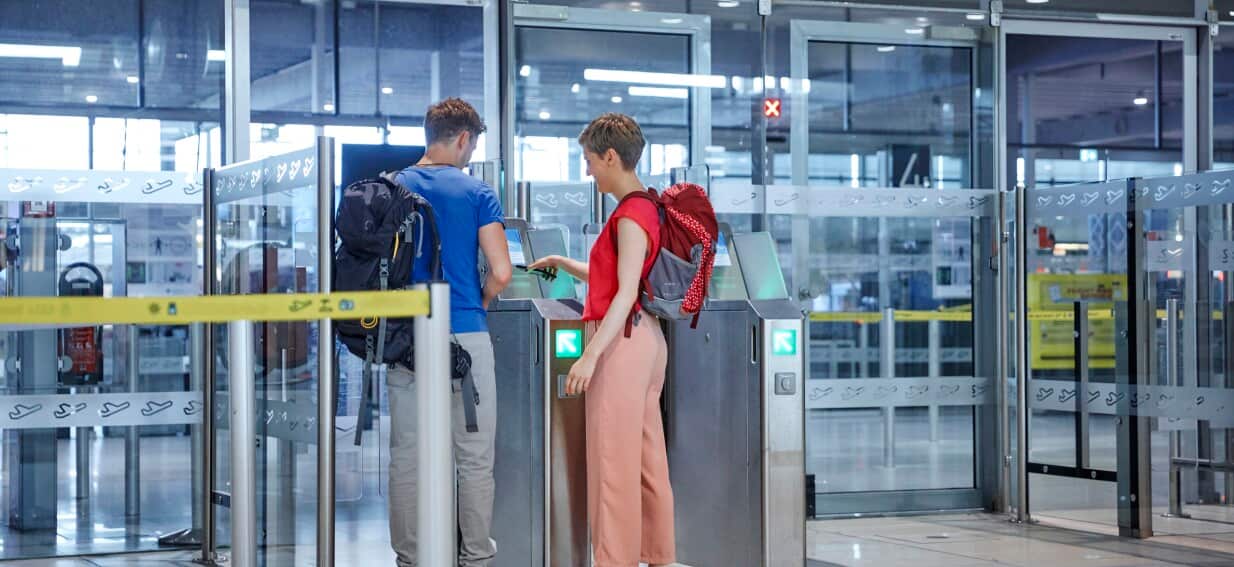
The European Union’s Schengen space will quickly implement a digital identification system for non-EU nationals that would trigger lengthy arrival and departure delays in its early levels.
From 12 October, these coming into or exiting the 27-country bloc can have their pictures taken and fingerprints scanned by passport management officers.
If you happen to refuse handy over this information, officers can deny your entry to the Schengen space, the Division of Overseas Affairs and Commerce’s Smartraveller web site warns.
Below the brand new Entry/Exit System (EES), this biometric information will probably be compiled alongside passport data comparable to your identify and date of beginning, date and place of entry and exit and whether or not you’ve gotten beforehand been refused entry.
This private information will probably be used to create a digital report, which is hooked up to travellers as people, not their passports.
As such, if you happen to overstay your visa, the EES will be capable to establish you utilizing your digital report, even if you happen to use a special passport, Smartraveller warns.
The Schengen space contains 29 European international locations inside which travellers can transfer freely with no need to undergo border controls or safe particular person visas. The Smartraveller web site retains an up to date listing of nations within the Schengen space.
The EES will solely apply to the borders between non-Schengen and Schengen international locations, not motion throughout the Schengen space.
The system will probably be deployed progressively, with full implementation by April 2026, in line with Smartraveller.


