

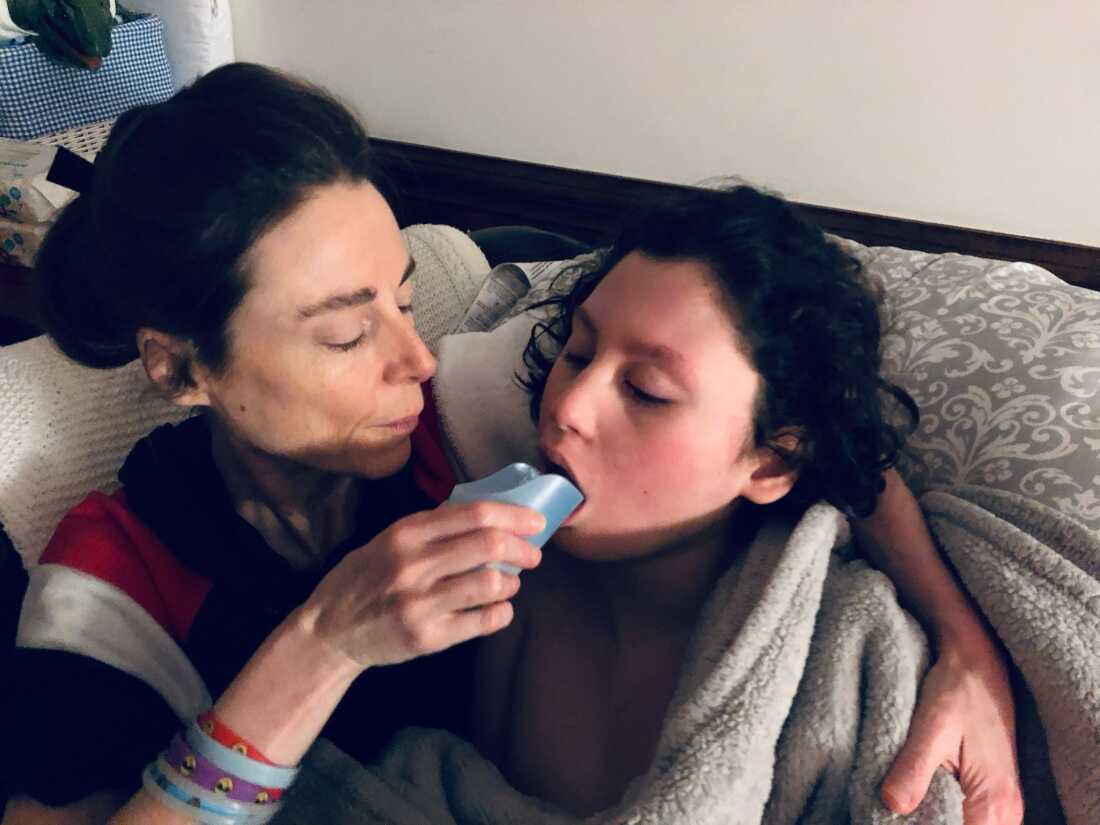
Alessandra Fabrello (left) cares for her son Ysadore Maklakoff. North Carolina Medicaid cuts that went into have an effect on Oct. 1 imply Fabrello may have a pay minimize as a household caregiver. Maklakoff qualifies for companies he cannot get as a result of suppliers already did not take Medicaid’s low reimbursement charges.
Aaron Marco
cover caption
toggle caption
Aaron Marco
Day by day for almost 18 years, Alessandra Fabrello has been a medical caregiver for her son, on prime of being his mother.
“It’s virtually not possible to elucidate what it takes to maintain a baby alive who must be useless,” mentioned Fabrello, whose son, Ysadore Maklakoff, skilled a uncommon mind situation known as acute necrotizing encephalopathy at 9 months previous.
By way of North Carolina’s Medicaid program, Maklakoff qualifies for a big slate of medical care within the household’s dwelling in Chapel Hill. Fabrello mentioned she works with staffing businesses to rearrange companies. She additionally discovered to provide the care ordinarily carried out by a health care provider, expert nurse, or extremely educated therapist as a result of she usually cannot get assist.
Now, broad cuts to North Carolina Medicaid will make discovering and paying for care much more troublesome. Medicaid is authorities medical health insurance for folks with low incomes or disabilities and each state and federal {dollars} pay for this system.

Nationwide, states are scrambling to shut finances shortfalls and are eyeing Medicaid, usually certainly one of a state’s greatest prices — even earlier than President Donald Trump’s hulking tax-and-spending regulation decreases federal spending on Medicaid by about $1 trillion over the following decade.
North Carolina and Idaho have already introduced plans to chop Medicaid funds to well being care suppliers, together with hospitals, medical doctors, and caregivers.
In Michigan and Pennsylvania — the place lawmakers have but to move budgets this 12 months — spending on Medicaid is a part of these debates. In Washington state, lawmakers authorized cuts to this system that won’t have an effect on who’s eligible, mentioned Hayden Mackley, a spokesperson for the state’s Workplace of Monetary Administration.
N.C. cuts underway
North Carolina’s Medicaid company instituted a minimal 3% discount in pay for all suppliers who deal with Medicaid sufferers on Oct. 1. Main care medical doctors face an 8% minimize and specialty medical doctors a ten% drop in funds, in response to the North Carolina Division of Well being and Human Companies.
Fabrello mentioned her son’s dentist already known as to say the workplace won’t settle for Medicaid sufferers come November. Fabrello fears dental work will grow to be one other service her son qualifies for however cannot get as a result of there aren’t sufficient suppliers who settle for Medicaid protection.
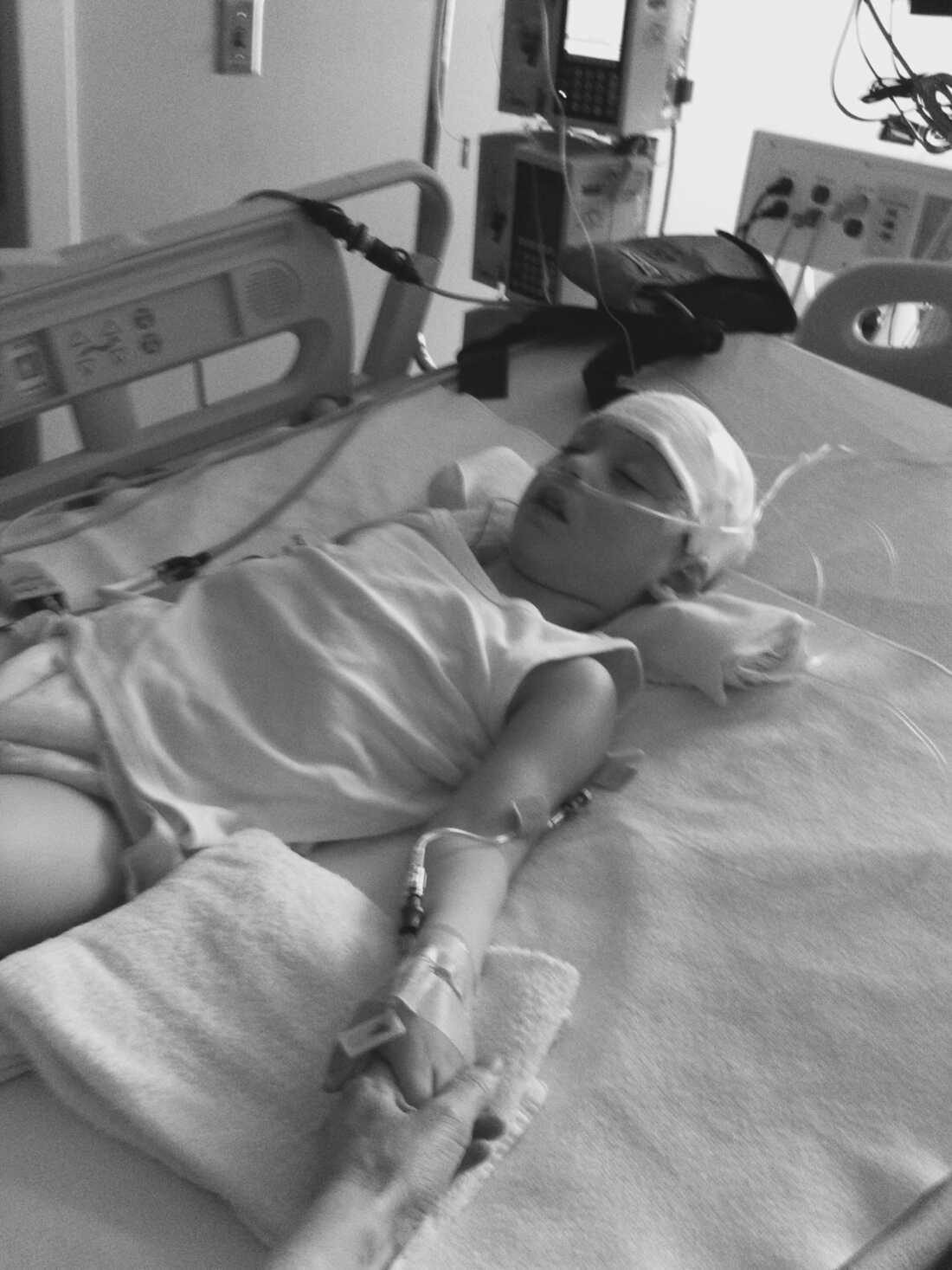
Ysadore Maklakoff, pictured throughout a hospital keep in 2011, had acute necrotizing encephalopathy, a uncommon mind situation, as a 9-month-old child. He has wanted round the clock medical care ever since.
Alessandra Fabrello
cover caption
toggle caption
Alessandra Fabrello
Occupational and speech remedy, nursing care, and respite care are all troublesome or not possible to get, she mentioned. In week, her son will get 50 hours of expert nursing care out of the 112 hours he qualifies for.
“Whenever you say, ‘We’re simply chopping supplier charges,’ you are really chopping entry for him for all his wants,” Fabrello mentioned.
Shannon Dowler, former chief medical officer for North Carolina Medicaid, mentioned that diminished funds to dentists and different suppliers will decrease the variety of suppliers within the state’s Medicaid community and end in “a direct lack of entry to care, worse outcomes, and trigger increased downstream prices.”
The cuts in North Carolina “do not have something to do” with the brand new federal regulation that cuts Medicaid funding, Dowler mentioned.
“That is just like the layers of the onion,” she mentioned. “We’re hurting ourselves in North Carolina approach forward of the sport, approach earlier than we have to do that.” North Carolina alone is projected to lose about $23 billion in federal Medicaid {dollars} over the following decade.
Greater than 3 million North Carolinians are enrolled in Medicaid. Deadlocked state lawmakers agreed to a mini finances in July to proceed funding state applications that gave the Medicaid company $319 million lower than it requested. Lawmakers can select to reinstate funding for Medicaid this fiscal 12 months, Dowler mentioned.
“All of us hope it adjustments,” Dowler mentioned, including that if it doesn’t, “you are going to see practices dropping protection of Medicaid members.”
Powerful choices
Every year since a minimum of 2019, North Carolina’s Medicaid company has requested for extra money than it acquired from the state legislature. A wide range of federal assets, together with cash supplied to states through the COVID-19 pandemic, helped bridge the hole.
However these funds are gone this 12 months, leaving the company with a alternative: Get rid of some elective elements of this system or power each supplier that accepts the general public insurance coverage to take a pay minimize. The state opted principally for the latter.
“It is a troublesome second for North Carolina,” mentioned Jay Ludlam, deputy secretary for North Carolina Medicaid. The minimize within the finances is “completely the other way of the place we actually need to go, must go, have been headed as a state.”

For Anita Case, who leads a small group of well being clinics in North Carolina, the cuts make it more durable to handle the “most susceptible in our group.”
Western North Carolina Neighborhood Well being Companies’ three clinics serve about 15,000 sufferers in and round Asheville, together with many non-English-speaking tourism staff. Case mentioned she’s going to take a look at staffing, companies, and contracts to search out locations to trim.
Hospitals liable to closure in Idaho
Idaho has about 350,000 folks enrolled in Medicaid. This month, state leaders there responded to an $80 million state finances shortfall by chopping Medicaid pay charges 4% throughout the board.
The broad cuts have raised backlash from nursing dwelling operators and affected person advocacy teams. Leaders of 1 nursing dwelling firm wrote in a latest op-ed within the Idaho Statesman newspaper that 75 to 100% of the funding at their amenities comes from Medicaid and the cuts will power them to “to cut back workers or settle for fewer residents.”
Idaho Division of Well being and Welfare spokesperson AJ McWhorter mentioned the state confronted powerful selections. It forecasted 19% progress in Medicaid spending this 12 months.
The Idaho Hospital Affiliation’s Toni Lawson mentioned the monetary pressure will likely be biggest at about two dozen small hospitals — ones with 25 or fewer beds — that dot the state. Lawson, the group’s chief advocacy officer, mentioned one hospital chief reported they’d lower than two days of money readily available to make payroll. Others reported 30 days of money or much less, she mentioned.
“Hopefully, none of them will shut,” Lawson mentioned, including that she expects labor and supply and behavioral well being models, which regularly lose cash, to be the primary to go due to this newest state discount in funds. A number of hospitals in principally rural areas of the state closed their labor and supply models final 12 months, she mentioned.
A giant a part of state budgets
Nationwide, Medicaid makes up a mean of 19% of a state’s basic fund spending, second solely to Ok-12 spending, mentioned Brian Sigritz, director of state fiscal research for the Nationwide Affiliation of State Price range Officers.
States usually had sturdy income progress in 2021 and 2022 due to financial progress, which included federal assist to stimulate the financial system. Income progress has since slowed, and a few states have minimize revenue and property taxes.
In the meantime, spending on Medicaid, housing, schooling, and catastrophe response has elevated, Sigritz mentioned.
In North Carolina, Fabrello has been unable to work outdoors of caring for her son. Her financial savings are virtually exhausted, Fabrello mentioned, and he or she was getting ready to monetary destroy till the state started permitting dad and mom to be compensated for caregiving duties. She has acquired that revenue for a couple of 12 months, she mentioned. With out it, she frightened about shedding her dwelling.
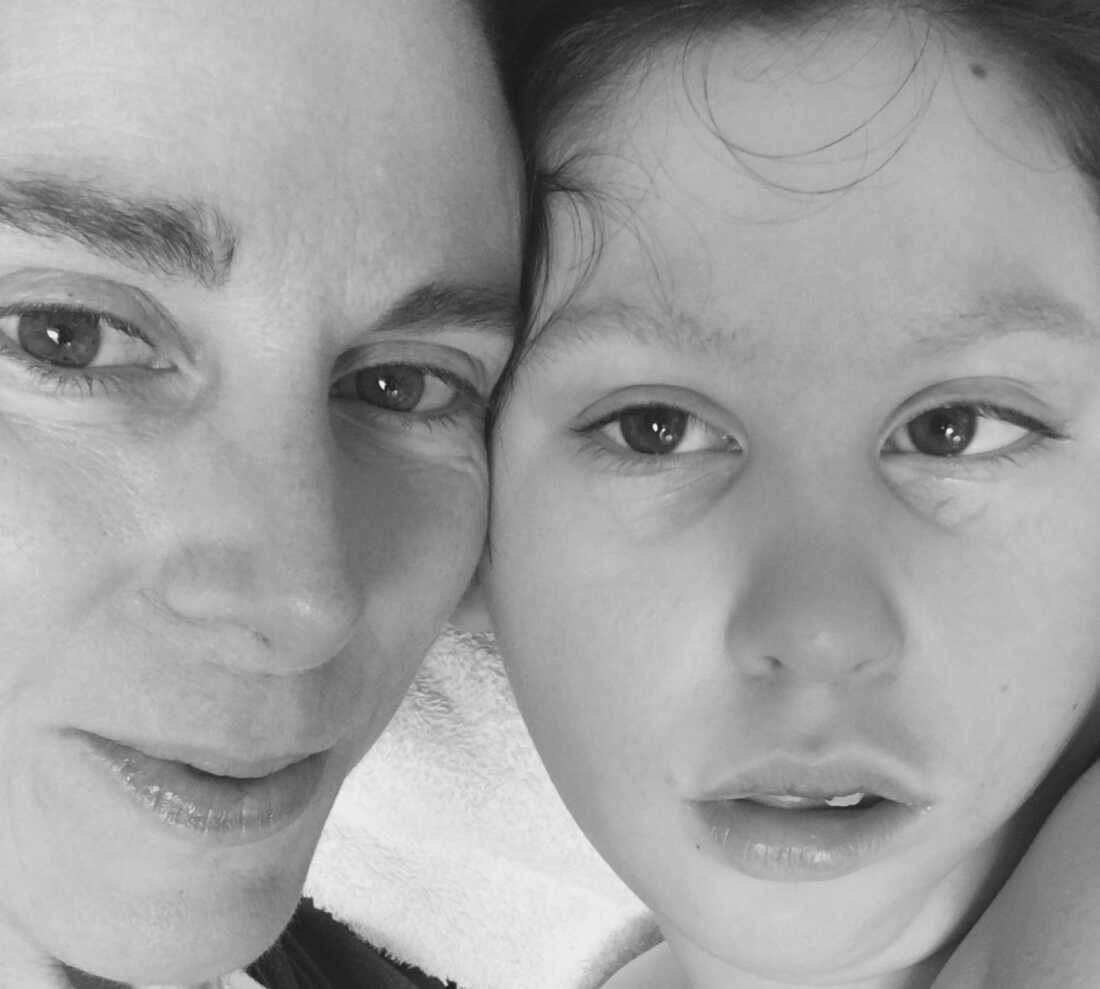
Alessandra Fabrello and her son, Ysadore Maklakoff.
Alessandra Fabrello
cover caption
toggle caption
Alessandra Fabrello
Now, with the state reductions, she faces a wage minimize.
“As dad and mom, we’re indispensable lifelines to our kids, and we’re struggling to combat for our personal survival on prime of it,” Fabrello mentioned.
KFF Well being Information is a nationwide newsroom that produces in-depth journalism about well being points and is likely one of the core working applications at KFF — the unbiased supply for well being coverage analysis, polling, and journalism.


