

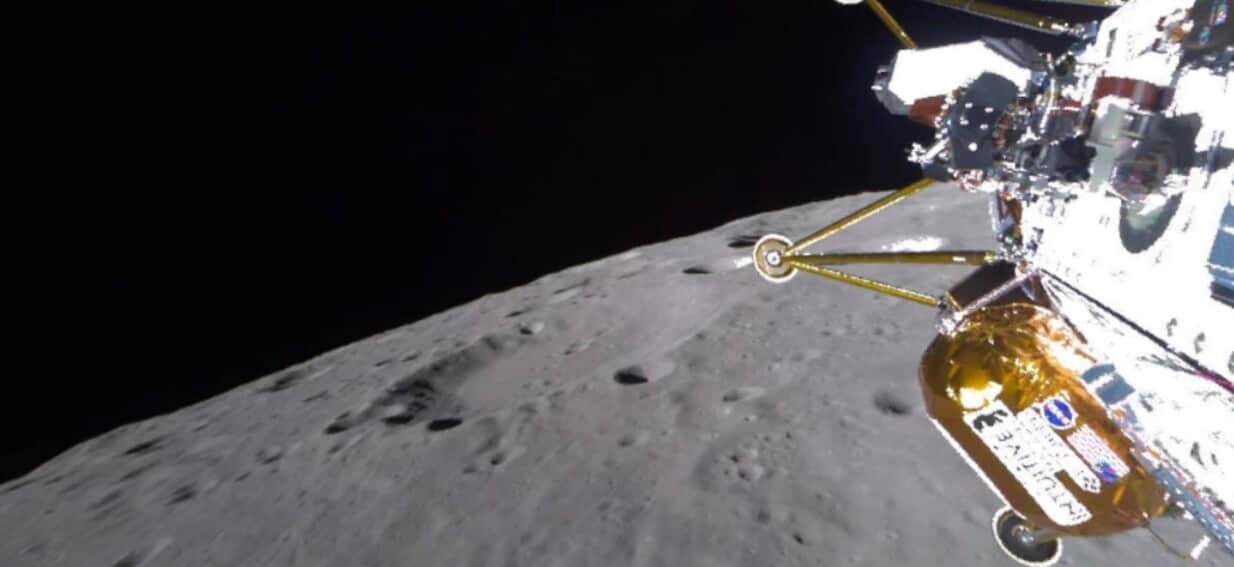
A brand new NASA directive — first reported by Politico and seen by Agence France-Presse — requires the appointment of a nuclear energy czar to pick out two business proposals inside six months, framing the push as essential to outpacing a joint Chinese language-Russian effort.
Signed by appearing NASA chief Sean Duffy, who can be the US transportation secretary, the 31 July memo is the most recent signal of the company’s shift in direction of prioritising human area exploration over scientific analysis beneath President Donald Trump’s second time period.
“Since March 2024, China and Russia have introduced on at the least three events a joint effort to position a reactor on the Moon by the mid-2030s,” it says.
“The primary nation to take action may doubtlessly declare a keep-out zone which might considerably inhibit the US from establishing a deliberate Artemis presence if not there first.”
The concept of utilizing nuclear power off-planet is just not new.
Since 2000, NASA has invested US$200 million ($308 million) in direction of creating small, light-weight fission energy methods, although none have progressed in direction of flight readiness, in response to the directive.
The newest effort got here in 2023 with the completion of three US$5 million ($7.7 million) trade research contracts that targeted on producing 40 kilowatts of energy, sufficient to repeatedly run 30 households for ten years.
Not like solar energy, fission methods can function across the clock — invaluable through the weeks-long lunar nights or Martian mud storms.
Advances in know-how have made such methods more and more compact and light-weight.
NASA formally dedicated to utilizing nuclear energy on Mars in December 2024 — the primary of seven key choices crucial for human exploration of the Purple Planet.
Primarily based on suggestions from the trade, floor energy wants ought to be at the least 100 kilowatts to assist “long-term human operations together with in-situ useful resource utilisation”, that means issues like life assist, communications, and mining gear to gather floor ice.
It assumes using a “heavy class lander” that carries as much as 15 metric tons of mass, and targets a “readiness to launch by the primary quarter of FY30,” that means late 2029.
NASA’s Artemis program to return to the moon and set up a long-lasting presence close to the South Pole has confronted repeated delays.
The timeline for Artemis 3, the primary deliberate crewed touchdown, has slipped to 2027, a date few view as practical given the deliberate lander, SpaceX’s Starship, is much from prepared.
China, in the meantime, is concentrating on 2030 for its first crewed mission and has confirmed more proficient at assembly its deadlines lately.


